Hanging guide
What size art should go above a sofa?
About two thirds of the sofa's width. A 200 cm sofa wants roughly 130 cm of art; a 240 cm sofa wants about 160 cm. Anything under half the sofa's width looks marooned, and this is the single most common mistake in decorating a room - the piece that looked large in a shop is almost always too small on the wall.
The same wall, twice
Both of these are renders from Murello's own engine, at true scale on the same photograph of the same room. The only difference is the size of the piece.
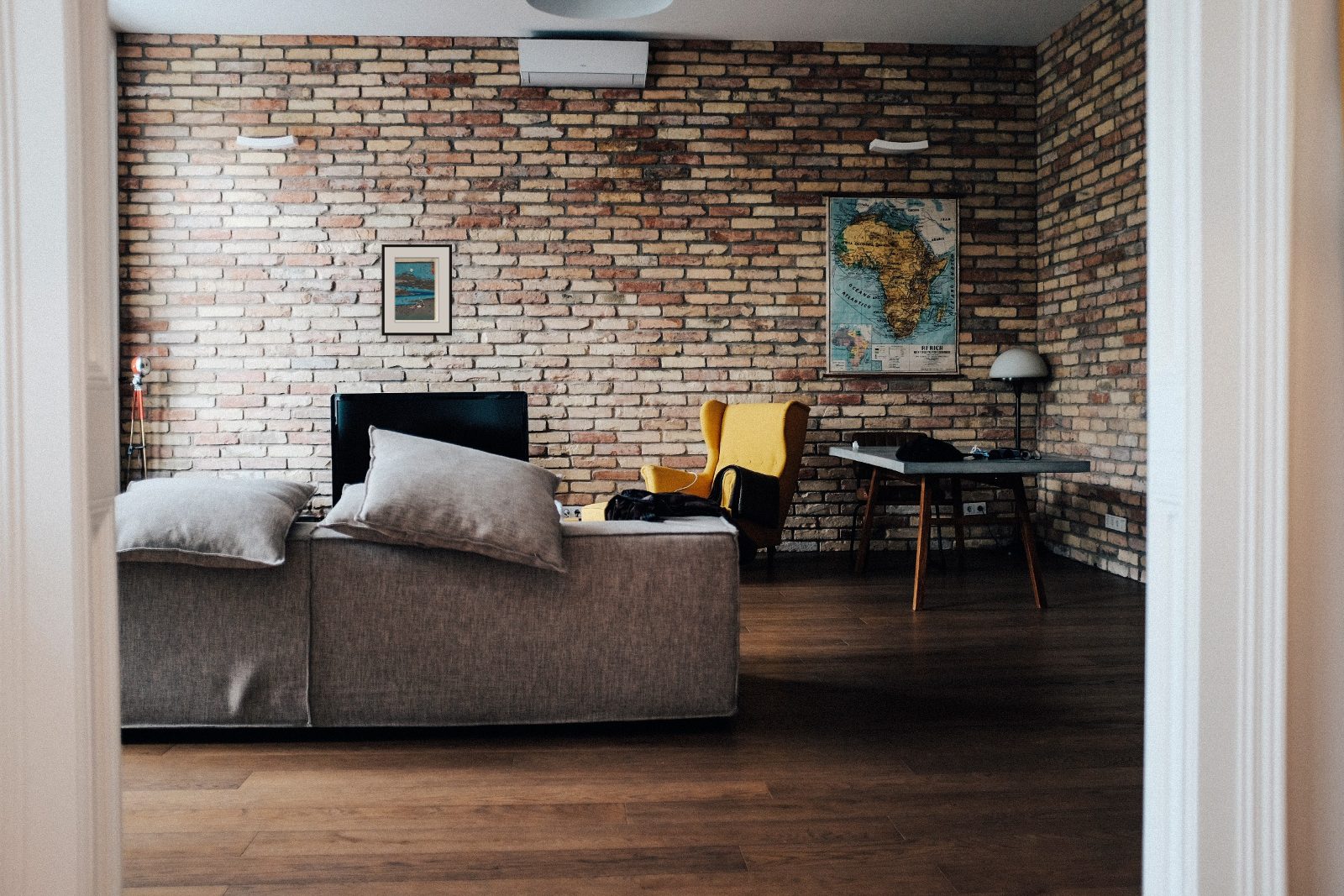
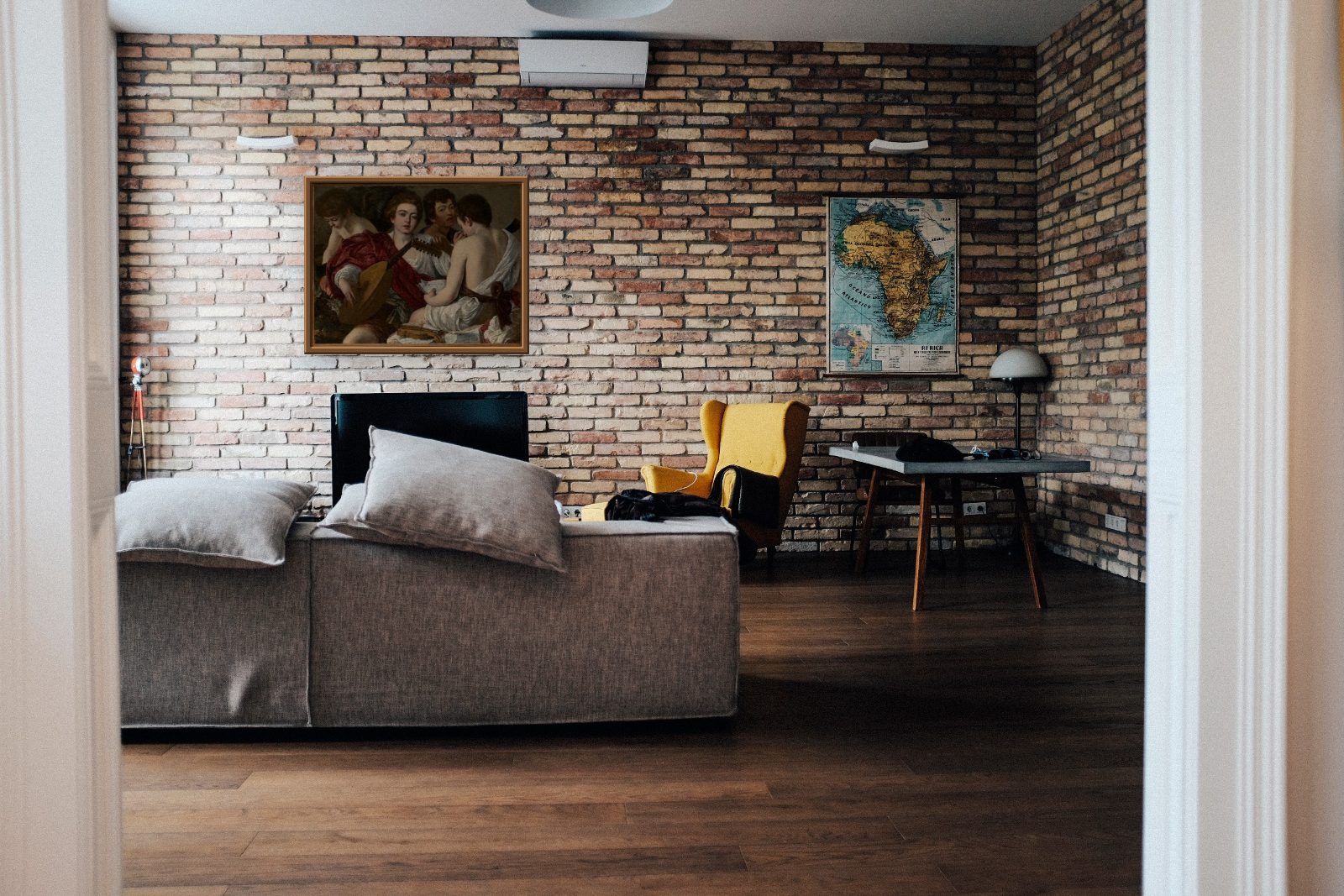
Nothing about the room changed. This is the entire argument, and it is why the rule is worth measuring for rather than eyeballing.
The numbers
| Sofa width | Minimum | Ideal | Maximum |
|---|---|---|---|
| 140 cm | 70 cm | 93 cm | 112 cm |
| 180 cm | 90 cm | 120 cm | 144 cm |
| 200 cm | 100 cm | 133 cm | 160 cm |
| 220 cm | 110 cm | 147 cm | 176 cm |
| 240 cm | 120 cm | 160 cm | 192 cm |
Ideal is two thirds of the sofa width, minimum is half, maximum is about 80%. Below the minimum the piece reads as an accident; above the maximum it starts to overhang and the furniture looks small.
Why a 60 cm print is almost always wrong
A3 and A2 prints are the sizes most people buy, because they are the sizes most shops stock and the prices are comfortable. A2 is 59.4 cm wide. Against a 200 cm sofa that is under a third of the width - less than half what the room is asking for.
It is not a taste failure. It is very hard to judge 130 cm in the abstract, and almost nobody measures before buying. The piece arrives, goes up, and looks like a postage stamp, and the usual diagnosis is "wrong picture" when the honest one is "right picture, half the size it needed to be".
Groups count as one piece
If a single 130 cm work is out of budget - and original art at that size usually is - a group reaches the same span for less. Measure the outer edges of the whole arrangement including the gaps between frames.
- Two pieces: 2 × 60 cm with a 6 cm gap spans 126 cm.
- Three pieces: 3 × 40 cm with two 6 cm gaps spans 132 cm.
- Three larger: 3 × 50 cm with two 6 cm gaps spans 162 cm.
Keep the gaps equal and treat the group's centre as the thing you hang at 145 cm, or 15-25 cm above the sofa back.
See it before you buy it
This is the exact problem Murello was built for. Photograph the wall, and any piece renders on it at its real measured size - so the difference between a 60 cm print and a 130 cm one is something you look at rather than something you estimate.
Questions people also ask
What size art goes above a 200 cm sofa?
Around 130 cm wide. The workable range is 100-160 cm: two thirds is ideal, half is the floor, and about 80% of the sofa width is the ceiling before the art starts to overhang awkwardly.
Can I use several smaller pieces instead of one big one?
Yes, and the rule applies to the group rather than each piece. Three 50 cm prints with 6 cm between them span 162 cm, which suits a 240 cm sofa. Measure the whole arrangement including the gaps.
Why does art always look smaller on the wall than in the shop?
Because a shop shows it isolated at arm’s length and a wall shows it surrounded by two or three metres of empty paint, from four metres away. Scale is relative to what is around it, and a wall is a much bigger thing to be relative to.
Should the art be wider than the sofa?
No. Keep it narrower than the furniture - roughly 80% is the practical maximum. A piece wider than the sofa makes the sofa look undersized and the pair stops reading as a group.
What if the sofa is against a very wide wall?
The sofa governs, not the wall. Size the art to the sofa, then treat the leftover wall as its own problem - a floor lamp, a plant or a second smaller piece at a different height.
Does this apply above a bed or console too?
Yes. Two thirds of the furniture width, with the same 15-25 cm gap beneath. Beds are the one case where people most often go too small, because headboards are wide.